A professional rodent inspection should answer more than whether a rat or mouse is present. It should establish what evidence exists, where activity is likely to travel, what makes the site attractive or accessible and which parts of the property could not yet be checked. Only then can a technician explain a proportionate control and prevention plan. The exact visit varies with the building and signs, but understanding the sequence helps you prepare and recognise a useful written outcome. This guide describes what to ask for without promising that every hidden void can be resolved in one appointment.
Before arrival: make the history usable
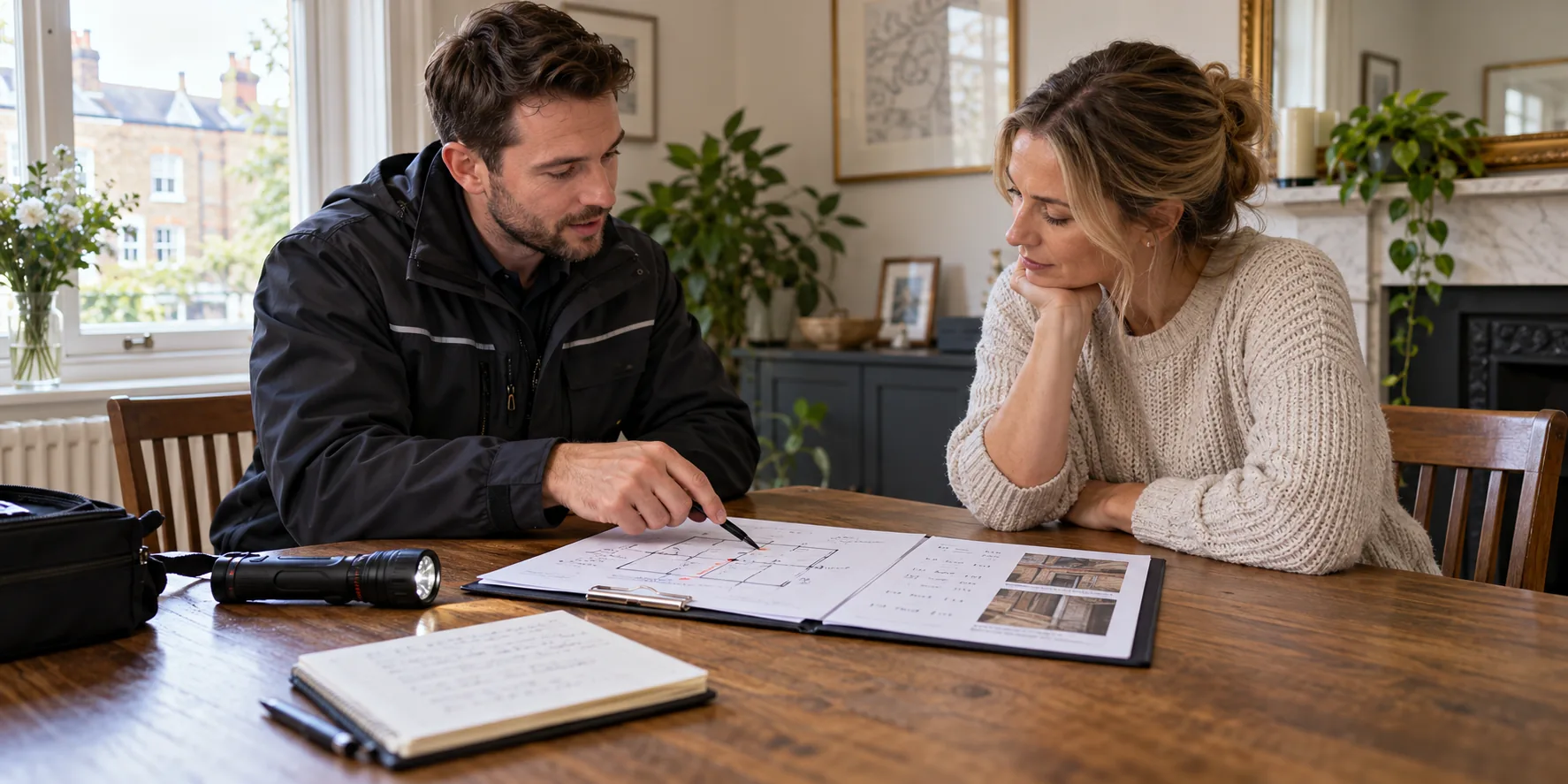
Gather a short timeline of sightings, droppings, noises, damaged goods and any action already taken. Include dates and precise locations, even if you are uncertain of the species. Photographs with scale can help. Tell the provider about pets, children, vulnerable occupants, food handling, inaccessible rooms and previous bait or traps. If there is damaged wiring, a gas concern, water leak or unstable access, raise it before the technician enters that area; the appropriate qualified service may need to make it safe first.
Do not strip the room or deep-clean every possible route just before the visit. Protect exposed food and clean contaminated food-contact surfaces, but keep photographs and a record of where signs were found. Ask whether cupboards should be accessible and whether a fixed appliance needs moving. Do not move a heavy or connected appliance yourself on an assumption. If a flat has shared risers or the garden boundary belongs to several parties, arrange permission for any communal access the provider expects to need.
The conversation at the start matters
The technician should ask what brought you to call, when it started, which rooms are affected and whether the pattern has changed. A useful question is, “What did you see, rather than what do you think it was?” This is not dismissing your account. It separates a confirmed sighting from a noise that could have several sources. A single pellet may be old or misidentified; a dated sequence of new marks offers a clearer starting point.
The inspector should also understand how the property is used. Food preparation, storage, pets, children, trading hours and access limits influence safe inspection and treatment. If there has been building work, a blocked drain or a change in bin storage, mention it. These details may reveal a route or attraction, but none proves causation on its own. In a managed block, the technician may need a contact who can open service spaces or approve repairs.
Inspect the evidence where it appears
The physical survey commonly begins at the most reliable signs: safely visible droppings, gnawing, runs, disturbed food, smears or a confirmed sighting location. The technician may compare size, distribution and position to decide whether rats or mice are more likely. The British Pest Control Association's pest-control guidance stresses identification before choosing proofing or treatment. If the evidence remains ambiguous, the correct result may be a provisional view and a monitoring plan, not a confident species label.
Expect the technician to explain which observations are current, which could be old and which need another check. They should avoid claiming an infestation size from one mark. The inspection may include accessible kitchen units, cupboards, loft access, basement edges, garden boundaries and service penetrations, depending on the evidence and safe access. It should not involve opening electrical enclosures or entering unsafe roofs. Where another trade is needed, that should be stated.
Follow routes, not just rooms
Rodents move through edges, voids and services. The room in which you saw an animal may only be an exit point from a longer route. A survey therefore looks at likely food and water sources, shelter and access through the building. A kitchen pipe gap may connect to a riser; a garden burrow may be unrelated to a sound in the loft. The inspector should test these possibilities against the signs rather than closing every visible gap.
Ask to see which opening is considered active and what evidence supports that view. A gap with no sign may still need maintenance, but it should not be presented as the proven source of the current problem. Premature sealing can trap an animal or redirect it. Some openings serve ventilation or building services and need a suitable repair method. If the correct route cannot be reached, the report should name the limitation and the next step required to inspect it.
Agree the scope of treatment
After inspection, the technician should explain whether treatment, monitoring, proofing, hygiene changes or further investigation is proposed. The plan should identify the areas involved, the method selected, occupant precautions and the number or timing of expected visits where this can be estimated. There may be several valid ways to control activity, depending on the species and property. The plan should say what is included in the quote and what requires a separate builder, electrician, drainage specialist or managing agent.
Be Safe's rat and mouse control service describes evidence-led inspection, control and prevention. Ask specifically whether any bait or trap will be accessible to children, pets or non-target wildlife, and how it will be checked and removed. Do not add your own products around a professional plan. If an earlier product is present, tell the technician exactly where it is. Clear safety instructions matter as much as the choice of device.
What you should receive after the visit
A useful summary separates confirmed findings from suspicions. It identifies inspected areas, inaccessible spaces, suspected species, likely routes, treatment locations, preparation and aftercare, responsible parties and a review date. It should state what you need to observe between visits. “Call if it returns” is vague; “record any new droppings beside the sink after the area has been cleaned” is more useful. Ask how success will be measured and when proofing should be completed.
If no rodent evidence is found, that is still a valid outcome. The technician may recommend monitoring or checking another cause for the sound or damage. Treatment on assumption can waste money and introduce unnecessary risk. The report should help you decide whether to watch, repair, request access to another area or book follow-up. In a rental, keep the written record to share with those responsible for the building; avoid assuming a legal duty from the presence of a single sign.
Ask whether the proposed proofing is part of the pest visit or a separate building repair. A technician can identify the route yet lack permission to alter a shared wall, drainage component or electrical service. Assign each recommendation to someone who can complete it, with a realistic date. Otherwise the treatment may be performed promptly while the opening remains available. A clear handover is particularly important in managed blocks and businesses with several contractors.
When a second visit is useful
Monitoring may show whether activity persists, moves or has stopped. Follow-up is especially useful when access was incomplete, there are several connected rooms or a repair must be coordinated. Keep a consistent dated log between visits. Do not interpret one quiet night as proof of complete control or one unexplained sound as failure. Compare the same signs in the same places. If a safety hazard emerges, such as a chewed cable, get the appropriate qualified assessment rather than waiting for the next pest appointment.
For urgent signs, the London pest control page provides a contact route; confirm current availability and scope. The existing article How to Prevent a Rat Infestation in London Homes covers wider household conditions once the immediate assessment is complete. The inspection itself should leave you with a defensible answer to four questions: what is known, what remains uncertain, what action will happen next and how the result will be checked.
Need help with a pest problem in London?
Call 020 4571 7829Check our coverage