If you suspect bed bugs, the first useful search is close to where people sleep. These insects can hide in narrow joints and fabric edges, so the top of a mattress may look normal while a seam or frame junction holds evidence. A careful home check can help you describe what you see, but it cannot guarantee that a room is clear. This guide follows an orderly route around one bed, with attention to safe handling and documentation. Stop before lifting heavy furniture, dismantling electrical fittings or carrying suspect items through the home.
Prepare the room without clearing it out
Choose good daylight or a bright torch. Keep a phone or camera and a notebook nearby. If possible, begin before changing the bedding, so stains and positions can be recorded. Do not pile pillows and sheets on a sofa in another room. If you need to move linen, keep it contained and follow later laundering advice suited to the confirmed situation. A rushed clear-out may remove useful evidence and create more spread risk than a controlled inspection.
Make a simple drawing of the bed and label its sides, headboard and nearby furniture. Record each sign at the point where you found it: “dark dots at left headboard screw” is far more useful than “bed bug signs somewhere on the bed”. Photograph in place, then add a second image with an object for scale if safe. You do not need to touch the mark or scrape it off to make a first report. If you find a live insect, ask a pest professional how to capture it safely for identification.
Begin with bedding and the mattress edge
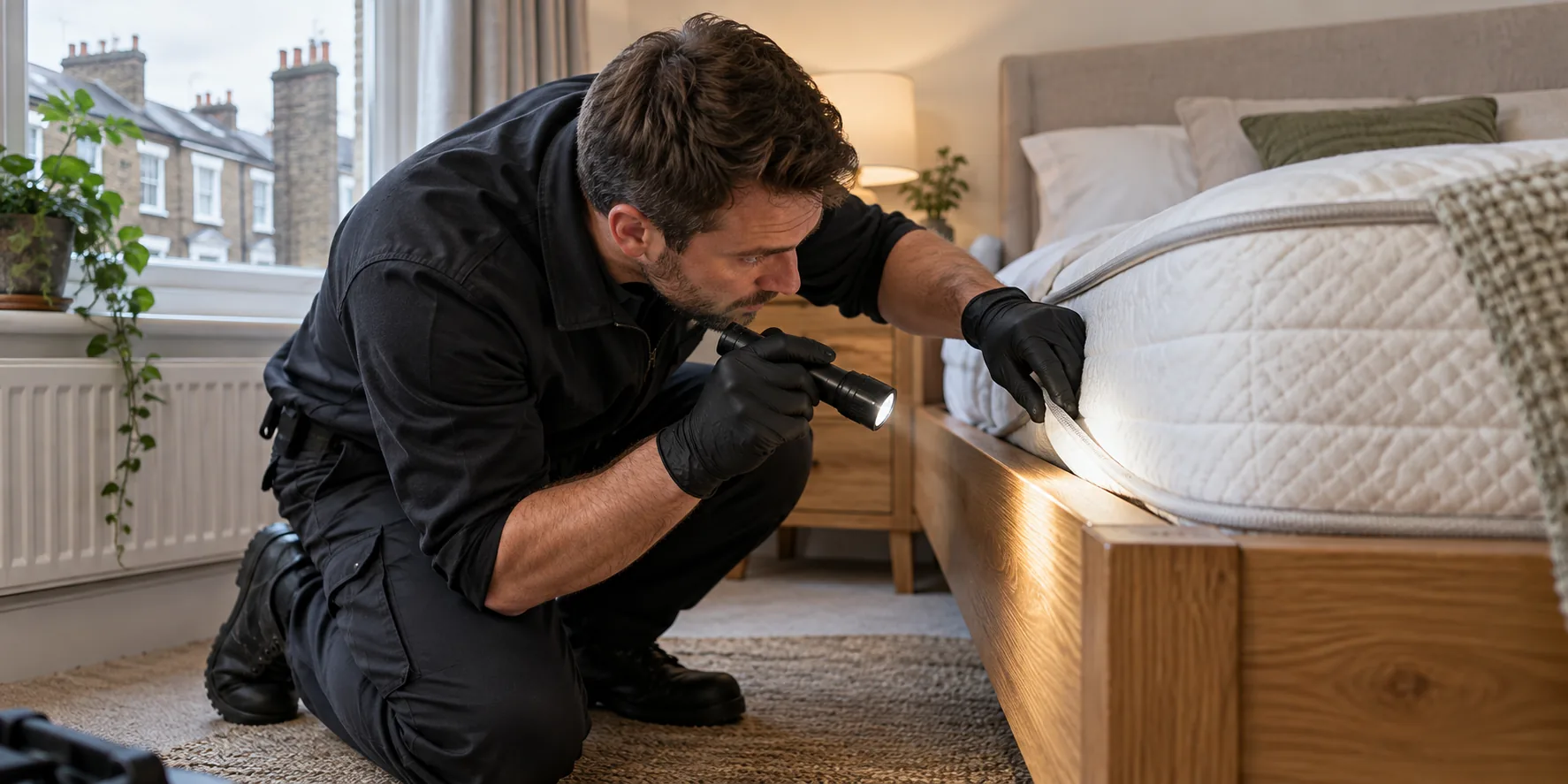
Look for small blood spots on sheets and pillowcases, but remember that a stain alone is not a diagnosis. The NHS bedbugs page lists blood spots, brown marks and bites among possible signs. Check the mattress piping, sewn seams, labels and handles, especially near the head end. Use the torch at a shallow angle to see into the folds without tearing fabric. A dark spot fixed in a seam may be useful evidence; ordinary dust, wear or another insect can also be present. Photograph rather than guessing.
If you can safely turn part of the mattress without injuring yourself or disturbing the room, examine the underside edge. A heavy mattress may require help, and an inspector may prefer to do that during the visit. Do not cut the mattress open or remove a fitted protective cover solely to search. The aim is a reliable map of accessible signs, not a destructive investigation. If several people share the room, note where each sleeps rather than assuming every mark came from the same location.
Follow the bed structure
Bed bugs may shelter in headboard joints, slats, screw recesses and frame cracks. Check accessible wooden or metal junctions with a torch. A flat frame surface can hide the narrow joint immediately behind it. If the headboard is fixed to a wall or includes electrical lights, leave it attached. Do not put tools into sockets or fittings. Mark inaccessible spaces on your sketch for a professional check. A useful search recognises what you could not inspect as well as what you saw.
Pay attention to the floor immediately around the legs and under the bed, but avoid dragging storage boxes across the room. If items under the bed must be handled, inspect their exterior where they sit and keep them in that room until the next step is agreed. A clean room can still have bed bugs; a cluttered room does not prove them. The practical issue is access to hiding places, not blame for the occupant's housekeeping.
Check the first ring of nearby furniture
Move outward to bedside tables, the back of a nearby chair, skirting directly behind the bed and picture frames within the immediate sleeping area. These are possible harborage points, not a reason to dismantle the whole bedroom. Check seams and joints before moving furniture. If a bedside table is heavy, leave it in place and describe the gap. Be Safe's bed bug treatment service explains that inspection should extend beyond the mattress when evidence suggests a wider area.
Do not treat every speck as an insect dropping. Compare the shape and pattern of marks with other evidence, such as a cast skin or live insect. A pest technician can inspect more systematically and distinguish bed bug signs from another pest. If you find evidence in several nearby places, record each separately. This helps define the likely treatment zone and avoid a plan based only on the most obvious stain.
What if you find nothing?
A brief negative search is not an all-clear. Some hiding places are inaccessible, and early activity can be difficult to find. Record which surfaces you examined, when and under what light. If unexplained marks continue, ask for professional assessment or monitoring rather than repeated unplanned spraying. Skin marks alone are not reliable confirmation; see the NHS guidance for care of symptoms and when to seek a pharmacist or GP. Keep health advice separate from identification in the room.
If the first bed is clear but another room has physical signs, tell the inspector. Avoid moving a sleeping arrangement on your own to “escape” the suspected room, since belongings can carry insects and the new room may become harder to assess. Sometimes a change of sleeping place is necessary for personal reasons; discuss how to contain items and continue monitoring. The key is to make movement deliberate and documented.
If the bed has storage drawers, examine the accessible joints and the drawer exterior before pulling it fully out. A deep drawer can be heavy and may catch on the frame. Do not tip its contents into another room for speed. Make a note if the drawer cannot be removed safely. Such limits help the professional decide whether a second person, different tool or partial dismantling is needed during the visit.
What if you find a likely insect?
Take a clear photograph of the insect in place if possible and note its location. A live specimen can be helpful, but do not handle it bare-handed or carry it loose through the home. Seek advice on safe containment. Do not throw out the mattress immediately or apply a general aerosol to every seam. Those actions may spread insects, obscure evidence or expose occupants to a product unsuitable for the surface. Confirm identification and the extent of activity first.
When booking, tell the technician which signs are physical, which are skin symptoms and which spaces were inaccessible. Ask whether adjoining furniture and rooms should be inspected, what preparation is required and whether any item should remain in place before treatment. Be Safe's London pest control page offers a contact route; confirm timing and scope for your address. The plan may involve targeted treatment and follow-up or further monitoring if the evidence remains weak.
Keep a location record after inspection
Whether you book treatment or monitor, use the same reference points for later checks: left mattress seam, headboard joint, nearby skirting and bedside furniture. Date each new photograph. Comparing the same locations is more informative than a growing collection of unlabelled images. Follow product-specific instructions on cleaning, laundering and re-entry if treatment is carried out. Do not assume that a stain disappearing after cleaning means the problem has ended; the question is whether fresh evidence appears.
For prevention around luggage and used furnishings, the existing article Proven Ways to Prevent Bed Bug and Flea Infestations at Home gives broader advice. This room check has a narrower purpose: build an accurate, safely collected map of the sleeping area. That map allows an inspector to distinguish a plausible bed bug sign from an assumption and to choose the next step without needlessly moving the whole bedroom.
Need help with a pest problem in London?
Call 020 4571 7829Check our coverage