Finding a small insect on your suitcase after a trip raises an immediate question: did anything else come home with you? One sighting deserves a careful check, but it does not prove that bed bugs have settled throughout the property. The best response keeps potentially affected belongings contained, records the insect for identification and examines the route from luggage to sleeping areas. Avoid carrying every item between rooms or spraying the case in frustration. A short, ordered sequence will give a pest professional useful evidence if help is needed.
Keep the luggage in one manageable place
If you have just arrived, set the case on a hard, accessible surface away from beds and soft furnishings. If it is already in a bedroom, do not drag it through the house without thinking through the route. Choose a contained place where you can inspect the exterior safely and where children and pets will not rummage through it. There is no need to put it outside in the rain or abandon it in a shared corridor. The goal is to limit unnecessary movement while you decide what you have found.
Take a clear photograph of the insect with scale before it disappears. If it can be safely contained in a small sealed container, that may help professional identification. Do not squeeze it into fabric or carry it loose. Note whether it was on the suitcase, clothing, bedding or a wall, and when you first saw it. A bug in a hotel room and a bug on a case at home are different observations; keep the timeline straight. Other small insects can travel too, so identification matters.
Inspect the case and its immediate contents
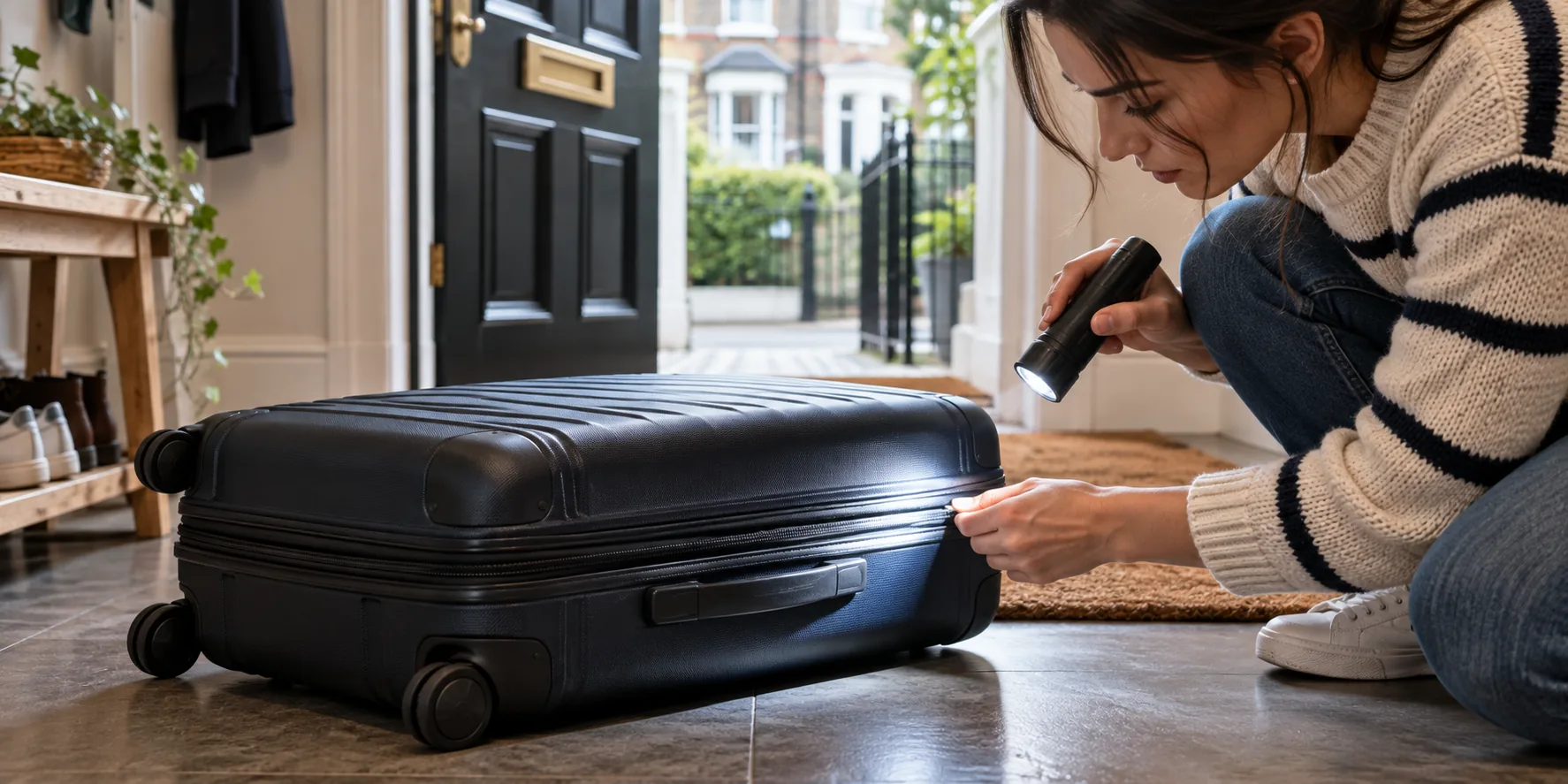
Check seams, zip folds, handles, pockets and the lining edges with a torch. Work over a surface where a moving insect would be visible. Open one compartment at a time rather than emptying everything onto a bed. Record any live insects, cast skins or small dark spotting in place. If you find nothing, note the parts you checked and any areas that remain inaccessible. A quick negative check cannot guarantee the case is clear, but it provides a starting record.
Keep clean and used clothing separate according to where it was stored on the trip, if that information is still known. The NHS bedbugs advice recommends checking luggage after coming from somewhere with known bed bugs and gives laundering guidance for affected items. Follow fabric-care labels and any instructions from the pest professional. A sealed bag can keep items contained on the way to a suitable wash or drying process. Do not assume every object can withstand heat or a freezer, and do not put electronics through a treatment improvised from a web search.
Check the first places the case touched at home
Make a simple route map: entrance floor, hallway, bedroom chair, bed or wardrobe. Inspect those accessible surfaces in the order the luggage contacted them. A case that rested briefly on a hard floor presents a different assessment from one left open on bedding for several nights. Still, neither situation proves spread on its own. Look for physical evidence near the sleeping area, including mattress seams and bed-frame joints, but avoid tearing the room apart. Be Safe's bed bug treatment service explains why inspection should establish the extent before treatment is chosen.
Tell others in the household what you found without announcing a confirmed infestation before identification. Ask them not to move the case or borrow its contents until you have an agreed plan. In a flat or shared house, a factual report to the relevant manager may be useful if physical evidence is confirmed, especially where rooms and laundry are shared. Avoid blaming the accommodation you visited or a housemate from a single insect; the journey and origin are often uncertain.
Resist the urge to discard everything
Throwing away a suitcase or clothing can create cost and may move insects through hallways and communal bins. It also removes material that could aid identification. Some items can be cleaned or treated; others may need a different decision after inspection. If disposal is ultimately advised, ask how to contain and label the item so it does not become someone else's second-hand purchase. Do not put an unwrapped suspected item beside a communal bin. A professional can advise on the actual item and treatment method rather than a blanket rule.
Likewise, an aerosol sprayed into luggage may be unsuitable for clothing or electronics and may not reach hiding places. Do not mix products or spray a sleeping surface on the assumption that one insect confirms bed bugs. If anything has already been applied, keep the packaging and tell the technician. Product-specific safety and re-entry instructions matter, particularly around children, pets and vulnerable occupants.
Decide when home inspection is warranted
A clearly identified bed bug on luggage justifies close monitoring and often professional advice. Arrange a home inspection if additional insects or signs appear, the case spent time on bedding, several people or rooms are involved, or you cannot assess the contents safely. If the identification is uncertain, a good first task is confirming the specimen. Ask which rooms need checking, whether items should remain contained and what evidence would trigger treatment. Be Safe's London pest control page provides a route to request assistance; confirm visit availability and scope.
The technician may conclude that treatment is needed, or that a short monitoring plan is more proportionate after an isolated finding. Ask how that decision was reached. One insect does not reveal whether there are eggs or a local population, but it also should not be dismissed without examining the route and sleeping area. A clear written plan should identify what to inspect next, how to handle luggage and when to review. If a treatment is arranged, follow the specific preparation instructions rather than continuing your own cleaning routine unchanged.
If your suitcase was borrowed or shared, tell the other user what was found in factual terms and explain which items may need checking. Do not send it straight back without inspection, and do not assume the person who lent it introduced the insect. The same principle applies to a work trip with shared storage: record the item's movement and ask the relevant manager how to keep it contained until identification. Calm communication can prevent unnecessary spread without making unsupported claims about origin.
Deal with bites as a separate issue
Skin marks after travel do not establish where or when an insect bit. If someone is itchy, seek advice from a pharmacist or GP as appropriate; follow the NHS bedbugs page for symptom guidance. A clinician can assess the skin but may not identify an insect from the marks alone. Keep dates of symptoms in the timeline, separate from dates when you saw physical evidence. That distinction helps avoid treating the wrong room or blaming the wrong trip.
For broader advice on travel, used furniture and flea prevention, read Proven Ways to Prevent Bed Bug and Flea Infestations at Home. Here the immediate task is narrower: contain the suitcase, confirm the insect, inspect the places it touched and make a deliberate decision about monitoring or treatment. You can act promptly without moving uncertainty through the whole home.
Keep a compact record for the next week
Write down the travel dates, where the suitcase was placed at home, what was found on each check and what cleaning or laundering was done. Use the same inspection points around the bed on later checks. If a new insect appears, photograph its exact position before handling it. If nothing new appears, continue the agreed monitoring period rather than declaring success from one quiet day. This disciplined record helps a technician assess whether the finding was isolated or part of a wider pattern and avoids a cycle of repeated sprays without a clear target.
Need help with a pest problem in London?
Call 020 4571 7829Check our coverage