A
Read the evidence
Use droppings, damage and sighting locations to identify likely species and movement.
RODENT CONTROL / LONDON
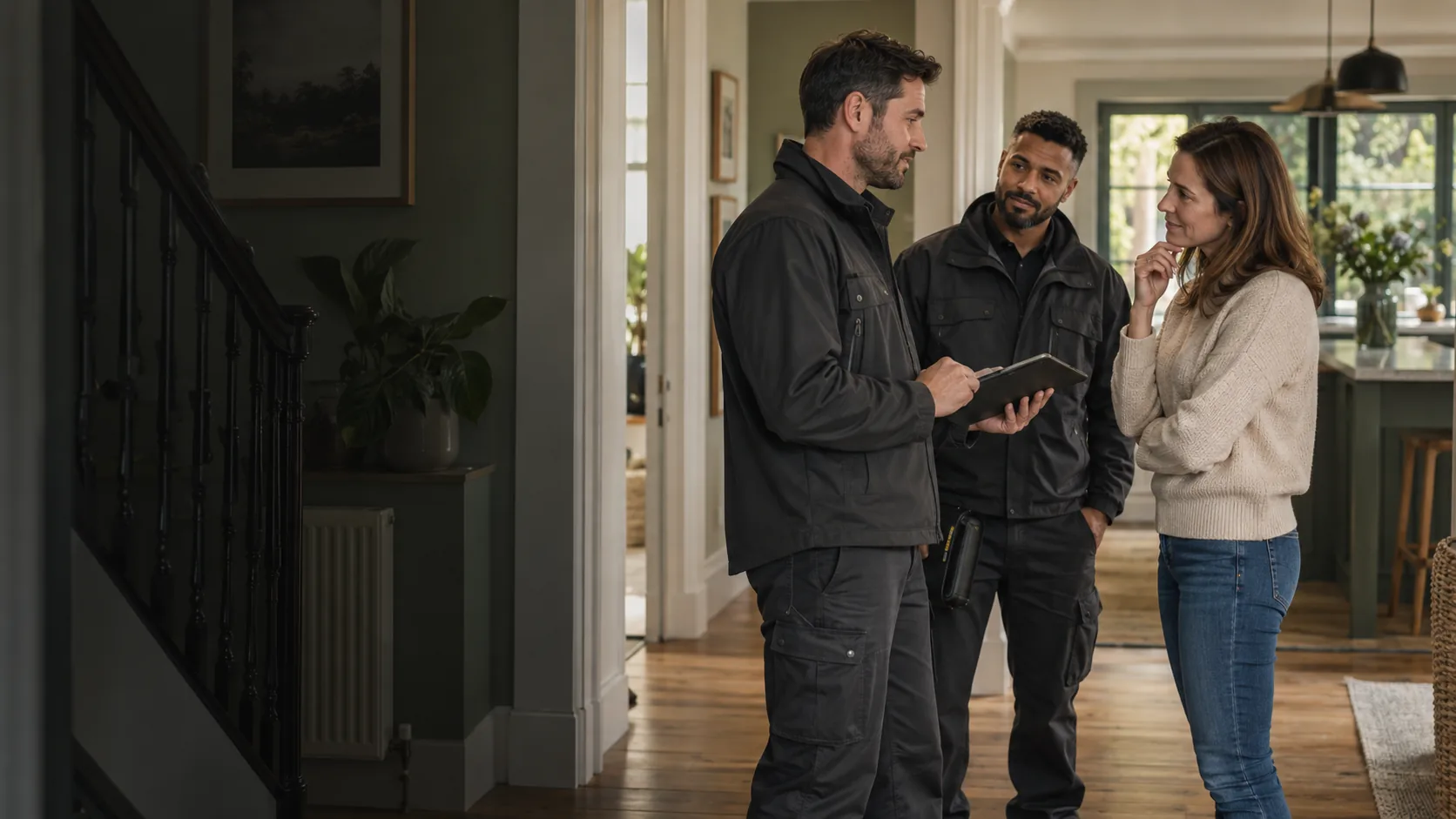
Hearing movement, finding droppings or noticing damage? We inspect rodent activity, identify likely routes and explain the right treatment.

WHAT WE DO
Professional rat and mouse control starts with understanding how rodents are entering, where they are travelling and what is helping them remain active.
Rodent control begins by reading the pattern of activity. Dropping size, noises, gnawing and the location of sightings help distinguish mice from rats and indicate how established the problem may be.
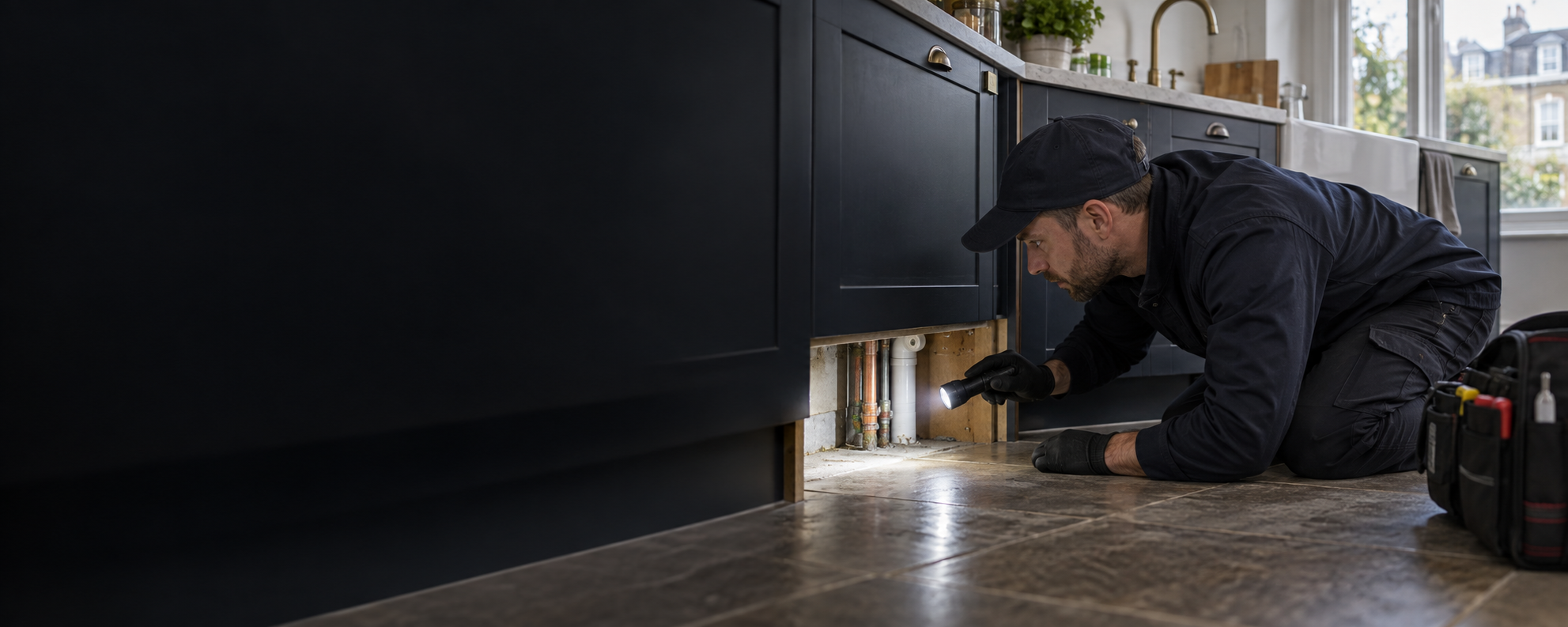
We inspect edges, service routes, cupboards, lofts, basements and external approaches where relevant. The goal is to identify how rodents are moving, what they are using for food or shelter and where control will be most effective.
A treatment plan can combine professional baiting or trapping with monitoring and practical changes to the environment. The method depends on the species, the property and the presence of children, pets, customers or sensitive stock.
Long-term reduction relies on access control. We highlight gaps, damaged vents, pipe penetrations and other vulnerable points, then explain which proofing and housekeeping measures should be prioritised.
Rats and mice leave different clues. Choose the closest match so we can focus the inspection on likely routes and harbourage.
 FIELD NOTE / RAT-AND-MICE-CONTROL
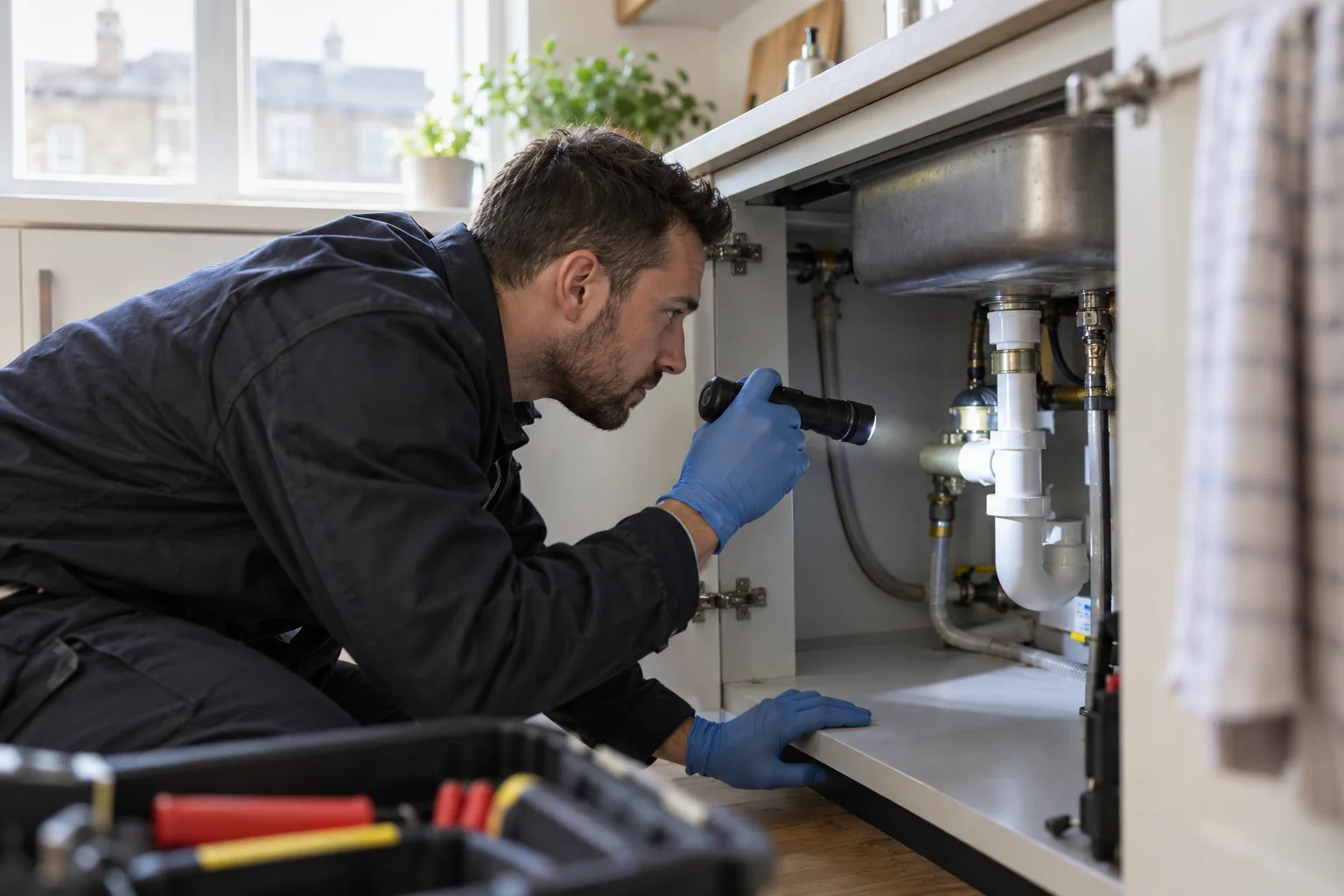
“Rodents follow repeatable routes. Finding those routes is what turns random control into a proper plan.”
A quiet void or narrow pipe gap can connect several rooms or properties. Inspection follows the route rather than stopping at the first droppings.
THE BE SAFE FIELD PROTOCOL
Use droppings, damage and sighting locations to identify likely species and movement.
Place treatment where rodents travel while accounting for people, pets and property use.
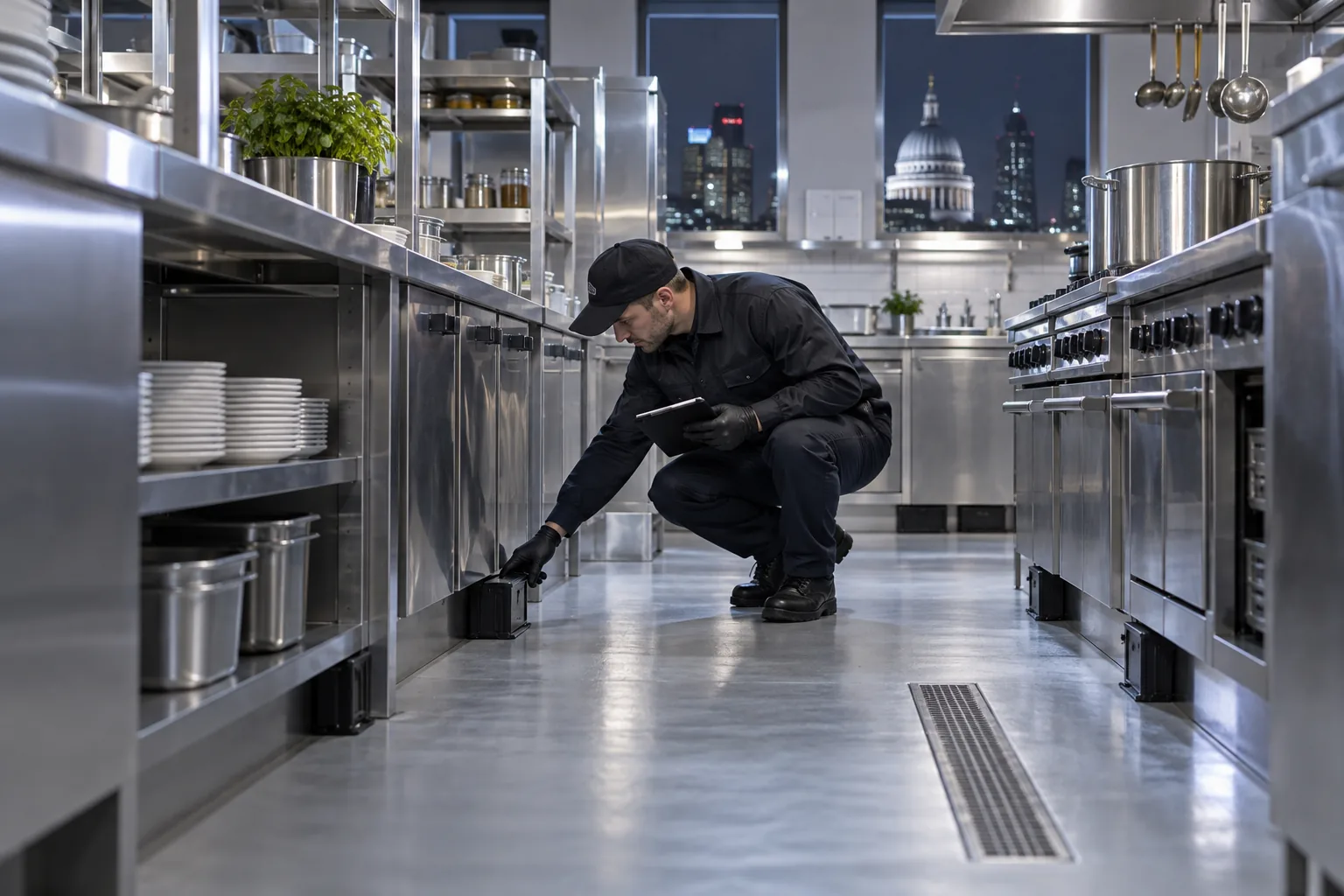
Prioritise proofing, food control and monitoring to reduce renewed access.
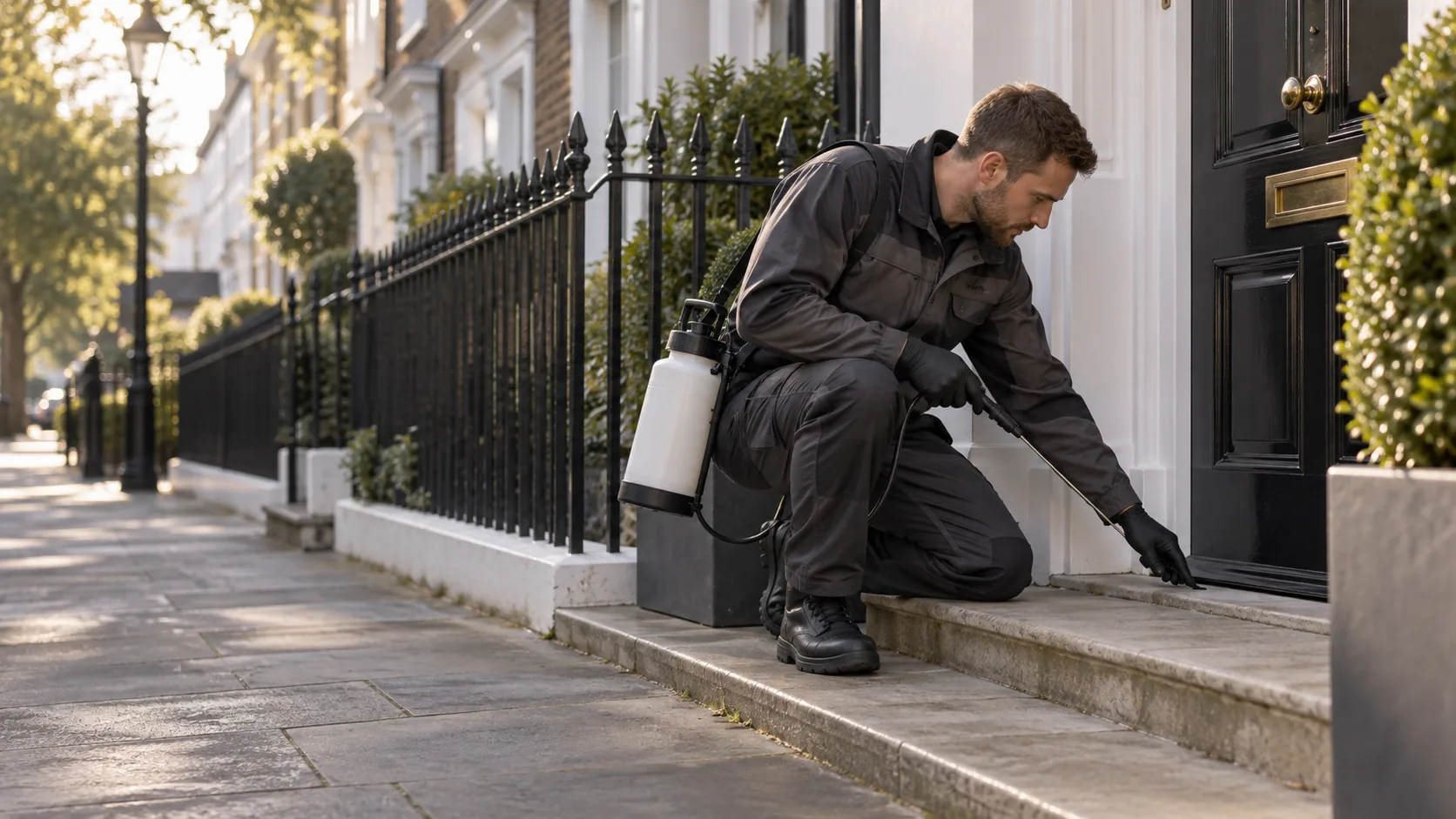
ONE TEAM.
TWO WORKING
ENVIRONMENTS.

Flats, terraces and houses each create different access routes through floors, walls, roofs and shared services.
Commercial rodent work considers stock, waste, deliveries, service areas and the records needed for ongoing management.
SERVICE SCENARIOS
Examples of how this service is assessed in different London properties. Every visit still begins with its own inspection.
Signal Small dark droppings
Focus Pipe gaps and unit voids
Next Treatment plus proofing
Signal Fresh soil and runs
Focus Waste and external access
Next Control the active route
Signal Gnawing and packaging loss
Focus Stock rooms and deliveries
Next Monitoring and site actions
DISPATCH AREA
Support across London for homes, landlords and businesses, with surrounding M25 coverage.
WHAT CLIENTS NOTICE
“The technician was friendly and made sure to explain the process clearly.”
“Their team was prompt and professional, and the treatment was effective.”
SERVICE QUESTIONS
07 USEFUL ANSWERSClear answers specific to this service and the way it is delivered across London.
Dropping size, noise, damage and where activity occurs all help; a site inspection provides a more reliable identification.
Rodents are often most active when a property is quiet and may travel through ceilings, walls or floor voids.
Traps may control individuals, but access, food and harbourage also need attention if activity is to stay reduced.
Yes. Shared walls, risers, basements and service penetrations can connect separate parts of a building.
We inspect likely routes and explain visible proofing priorities, although concealed routes can sometimes require further investigation.
The treatment plan accounts for pets and occupants, with placement and instructions explained before work begins.
Early action is sensible because rodents can contaminate areas, damage materials and establish regular routes.
NO FORM. NO WAITING.
24/7 emergency pest control across London and the M25.