A
Identify the insect
Confirm whether the evidence points to ants, fleas or another small pest.
INSECT CONTROL / LONDON
Repeated trails, bites or activity around floors and fabrics can quickly become disruptive. We assess the source and plan targeted treatment.

WHAT WE DO
Ant and flea problems behave differently, but both require more than treating the insects immediately visible in one room.
Ants usually reveal a route between a food source and a hidden nest. Fleas behave differently, developing through stages in floor-level fabrics, cracks and resting areas. Correct identification keeps the response focused.
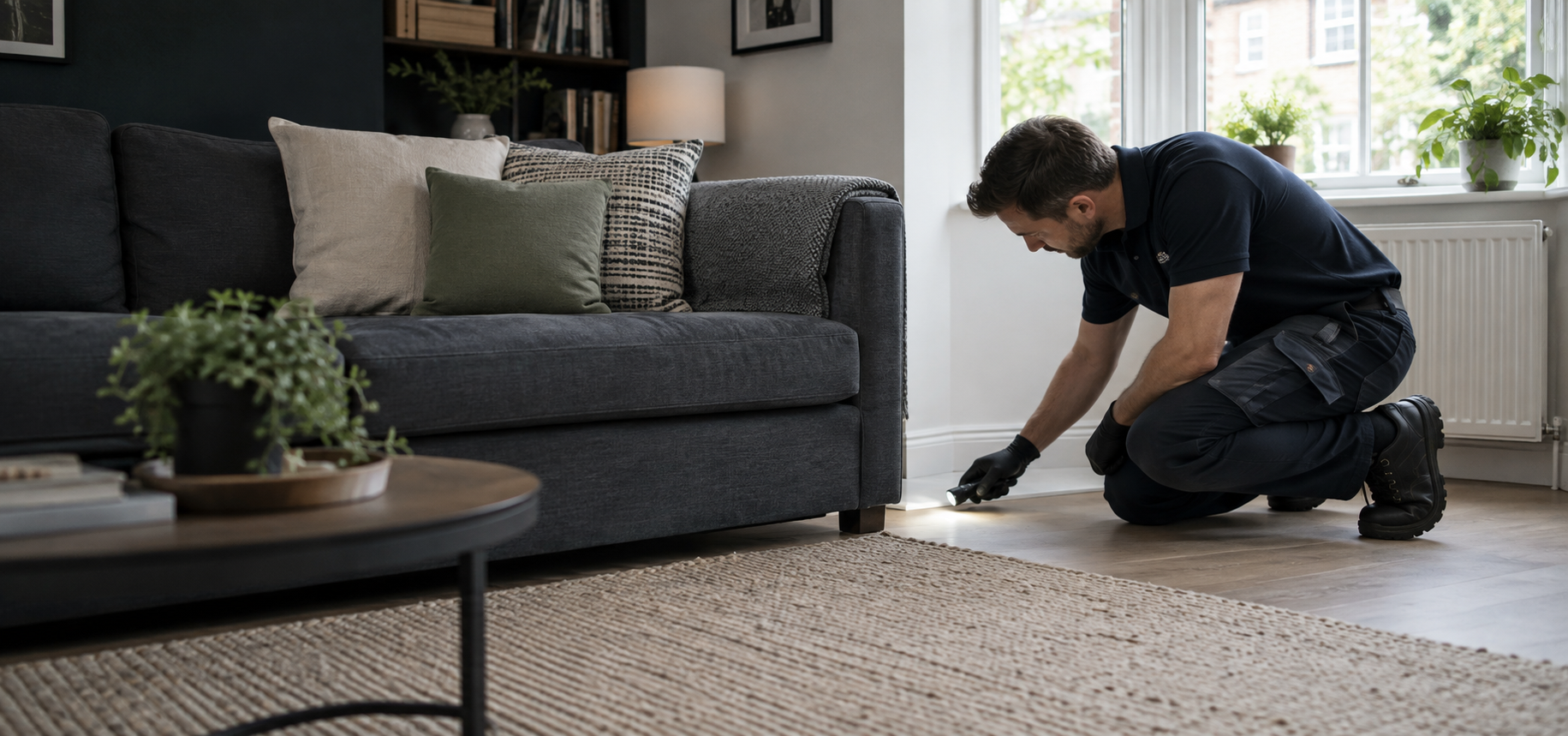
For ants, we trace trails and inspect entry points, moisture and food access. For fleas, the assessment considers pets, soft furnishings, floor edges and rooms where hosts spend time. The visible adult insect is only part of the cycle.
Treatment is matched to the insect and environment. Targeted products, cleaning preparation and access to key areas may all be involved. We explain what must happen before the visit and which surfaces should remain undisturbed afterwards.
Prevention follows the biology of the pest. Sealing ant access, improving food storage, coordinating pet care and maintaining thorough floor-level cleaning can all support the professional treatment plan.
Ant trails and flea activity require different investigations. Choose the sign that most closely matches what is happening.
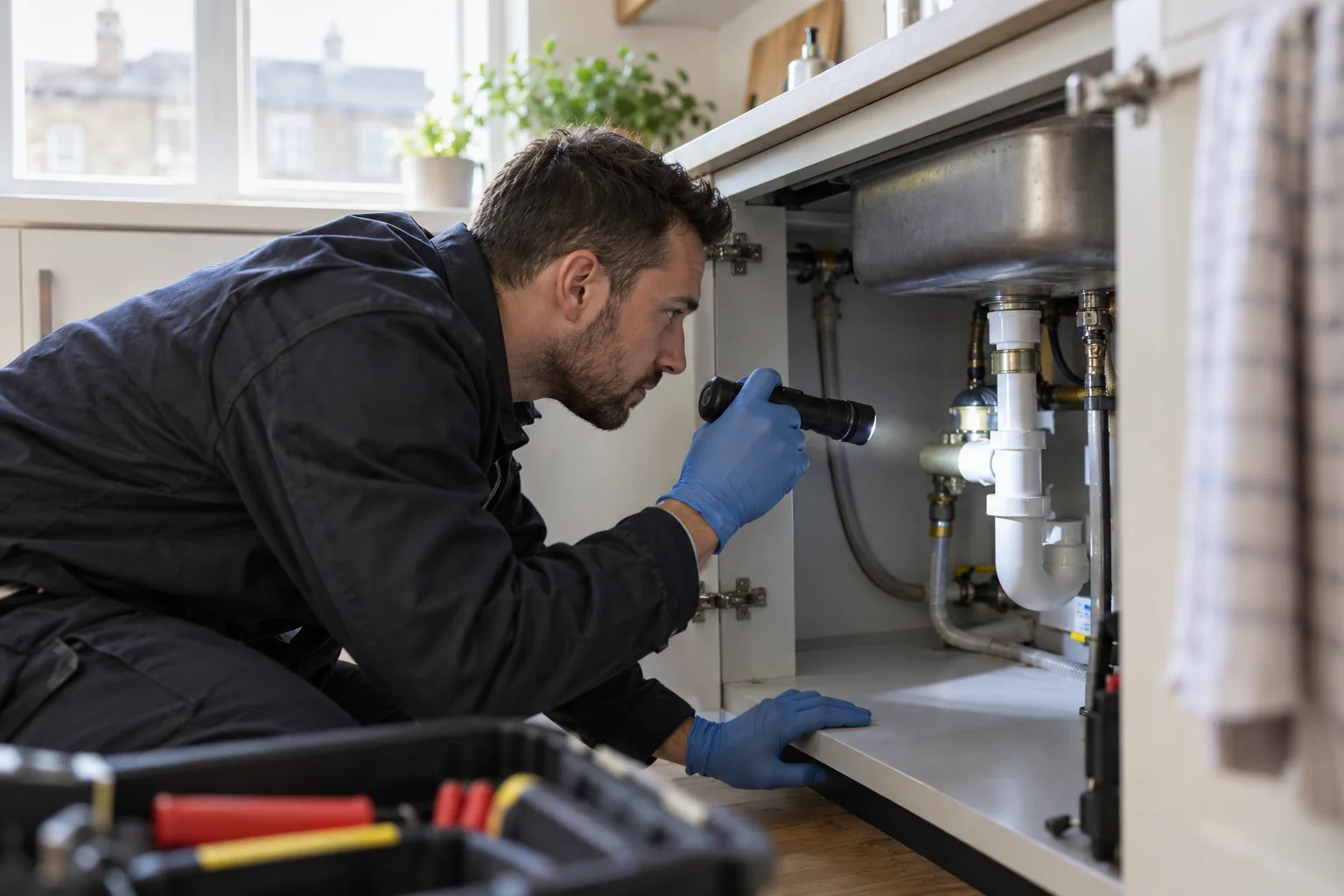 FIELD NOTE / ANT-AND-FLEA-CONTROL
“Ants show you a route; fleas show you a cycle. Each problem needs a different investigation.”
We use the location and timing of activity to decide whether the priority is a nest route, a host area or developing insects hidden at floor level.
THE BE SAFE FIELD PROTOCOL
Confirm whether the evidence points to ants, fleas or another small pest.
Treat trails, harbourage or development areas rather than relying on broad surface spraying.

Use cleaning, access control and pet-related actions where they are relevant.
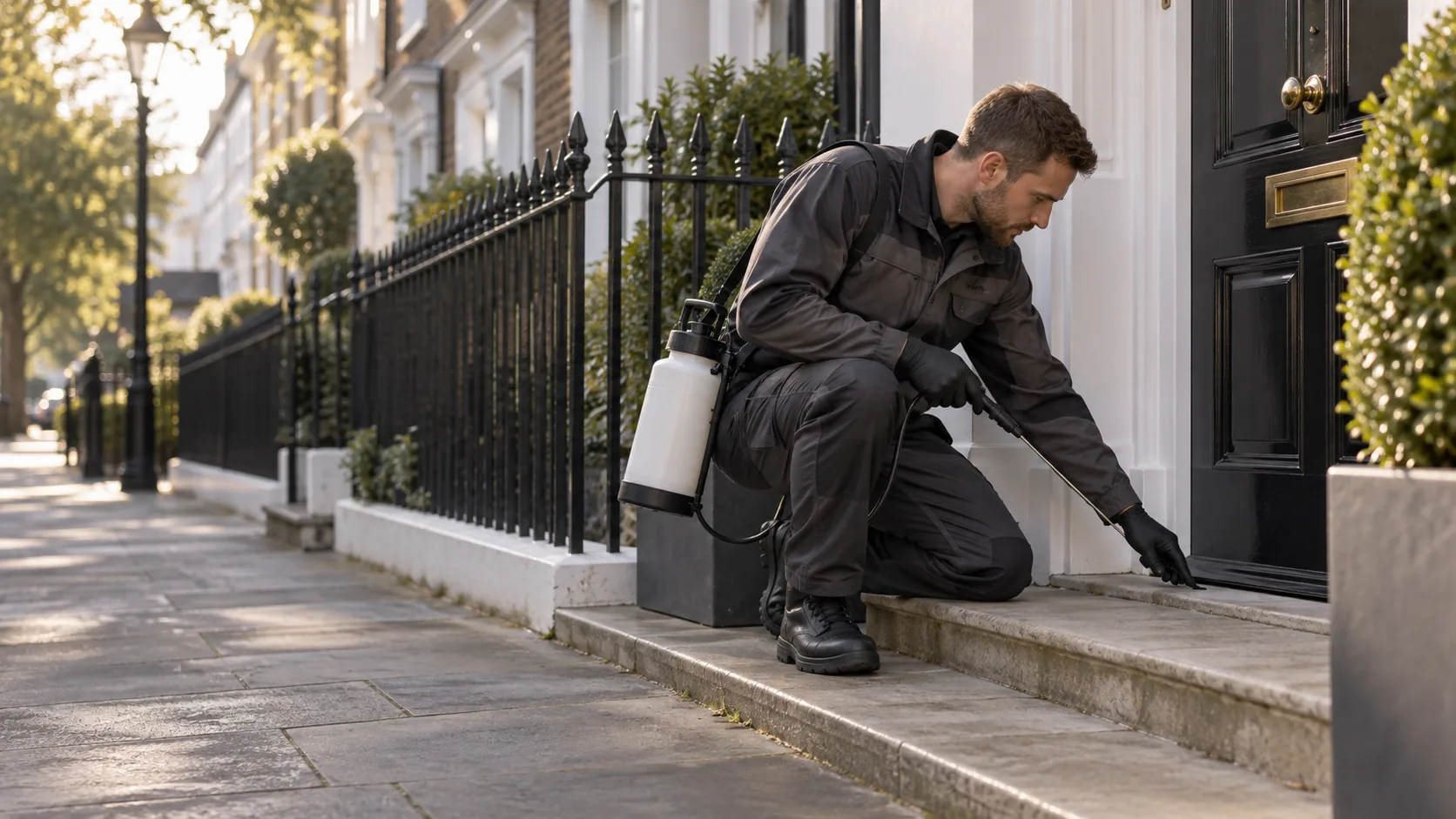
ONE TEAM.
TWO WORKING
ENVIRONMENTS.

Advice is adapted around kitchens, children, pets, fabrics and the rooms where activity is strongest.
We consider food areas, staff rooms, communal routes and the need to coordinate access across the premises.
SERVICE SCENARIOS
Examples of how this service is assessed in different London properties. Every visit still begins with its own inspection.
Signal Repeated line to food
Focus Entry edge and hidden nest
Next Target the route
Signal Jumping insects near seating
Focus Pet resting areas and flooring
Next Treat the development zone
Signal Trail near stored food
Focus Wall edge and cupboards
Next Remove access and attractants
DISPATCH AREA
Support across London for homes, landlords and businesses, with surrounding M25 coverage.
WHAT CLIENTS NOTICE
“The technician was friendly and made sure to explain the process clearly.”
“Their team was prompt and professional, and the treatment was effective.”
SERVICE QUESTIONS
07 USEFUL ANSWERSClear answers specific to this service and the way it is delivered across London.
A visible trail may be connected to a nest that remains active, while food and access continue to support it.
They are reproductive ants leaving a mature colony, and their appearance can help indicate where activity is established.
Yes. Developing stages can remain in the environment, so property treatment and veterinary advice may both be relevant.
Pupae can emerge over time in response to movement, which is why follow-through and monitoring matter.
Only the relevant areas should be prepared; we give instructions based on where evidence and host activity are found.
Yes. We assess trails, food access and entry points in offices, retail and food-related premises.
Seal accessible gaps, store food securely, clean spills promptly and maintain pet treatment where applicable.
NO FORM. NO WAITING.
24/7 emergency pest control across London and the M25.