A reliable business pest plan joins day-to-day housekeeping with clear reporting and professional review. It should fit the site’s operations, protect staff and customers, and make responsibilities clear when premises are shared or managed by several parties.
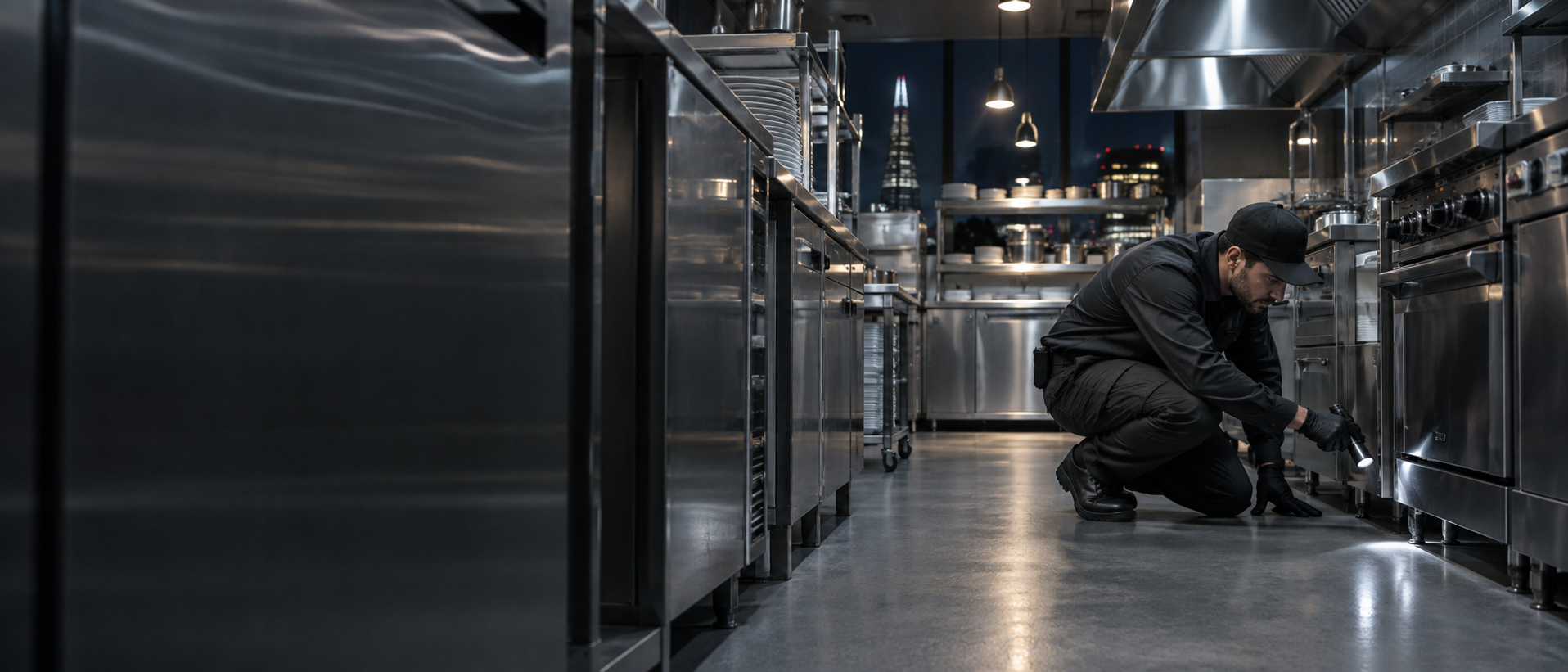
Give staff a simple reporting route
Ask staff to record the time, exact location and nature of a sighting rather than dealing with it informally. Photographs and retained packaging can help identification. Nominate one person to share access information and recent maintenance changes with the technician.
Review deliveries, storage and waste
Inspect vulnerable goods on arrival, rotate stock and keep storage clear enough for checks. Waste areas should have closing containers and a cleaning schedule. Repeated activity may involve neighbouring units or common services, so record which spaces were actually inspected.
Use treatment that suits the operation
Restaurants, offices, shops and managed buildings have different access and timing needs. Our commercial pest control service provides discreet inspection, clear documentation and treatment planning, with urgent advice available by phone.
Why correct identification comes first
Different pests can leave similar signs, and a quick sighting rarely shows the whole picture. With pests in food and working areas, useful evidence includes sightings, damaged packaging, droppings, insect skins and activity around waste or deliveries. Record the date and precise location, take a clear photograph where it is safe to do so and avoid removing every trace before an inspection. Good identification prevents wasted treatment, reduces unnecessary pesticide use and helps the technician decide whether monitoring, immediate control or a repair is the sensible next step. If the evidence is incomplete, it is better to say so and gather more information than to treat on assumption.
A safe first response
Keep children and pets away from contaminated or actively treated areas and follow product labels if anything has already been used. Do not mix pesticides, move loose poison around the property or spray surfaces used for sleeping or food preparation. Avoid carrying furniture, bedding, stock or stored belongings into another room until the likely pest and route are understood. Where there is contamination, wear suitable gloves, ventilate as appropriate and ask for professional advice before disturbing it. These measures do not replace treatment, but they can prevent a manageable problem becoming harder to trace.
Think about the whole property
The room where a pest is noticed is not always the place where it entered or settled. A useful assessment considers food, water, warmth, shelter and movement between spaces. In a flat, office or managed building, pipework, risers, corridors, bin stores and other shared areas may involve a landlord, freeholder or managing agent. That does not prove activity elsewhere; it simply means access and responsibility should be clear. Tell the technician which areas can be entered, which are locked or shared and whether recent repairs, deliveries or changes in use may be relevant.
What a professional inspection should cover
A professional visit should begin with questions about when the problem started, how often signs appear and what action has already been taken. The physical check may include zoned inspection of storage, preparation, staff, plant and waste areas. Findings should be separated from possibilities, with limitations recorded where areas cannot be accessed. You should be told what pest is confirmed or suspected, what evidence supports that view and what further monitoring may be required. A clear inspection also helps define the treatment area so that work is focused, preparation is realistic and follow-up can be compared with a useful starting record.
Treatment, preparation and follow-up
The treatment plan should state what will be done, which rooms or zones are included and how occupants need to prepare. In this situation, treatment timing and preparation must protect food, staff, customers and normal operations. Ask how long people or pets must stay away, whether cleaning should be delayed and what changes are expected before the next review. Some problems can be resolved in one visit; others require monitoring or repeat treatment because of the pest’s life cycle, the size of the site or continuing access. Follow-up is most useful when new signs are dated and compared with the original pattern rather than judged from memory.
Prevention after the immediate problem
Prevention should address the route and conditions demonstrated during inspection. It may involve repairing a particular gap, changing storage, improving waste handling, dealing with moisture or reviewing how goods enter the property. Avoid broad promises that a building can be made permanently pest-proof: doors open, services change and pests can be introduced in luggage, furniture or deliveries. Instead, keep a simple inspection routine and respond early to fresh evidence. Practical advice should name who is responsible for each action and distinguish essential safety work from optional improvements.
Questions worth asking before you book
Ask whether the quoted price covers inspection, treatment materials, the number of planned visits and written aftercare. Confirm what preparation is required and whether it changes if the pest has not yet been identified. For rented or commercial premises, ask who must authorise access and how findings will be documented. Tell the company about children, pets, allergies, food handling, vulnerable occupants or restricted areas before attendance. A reputable service will explain uncertainties, avoid guarantees that biology cannot support and give you a clear contact route if activity continues after the planned work.
Need help with a pest problem in London?
Call 020 4571 7829Check our coverage